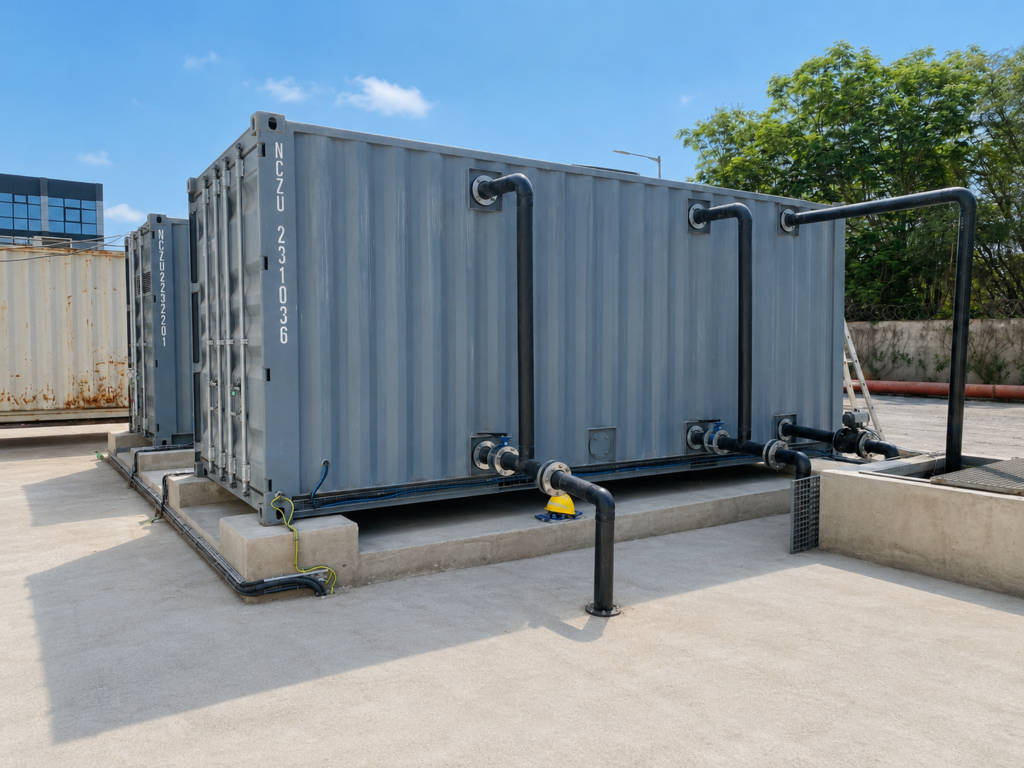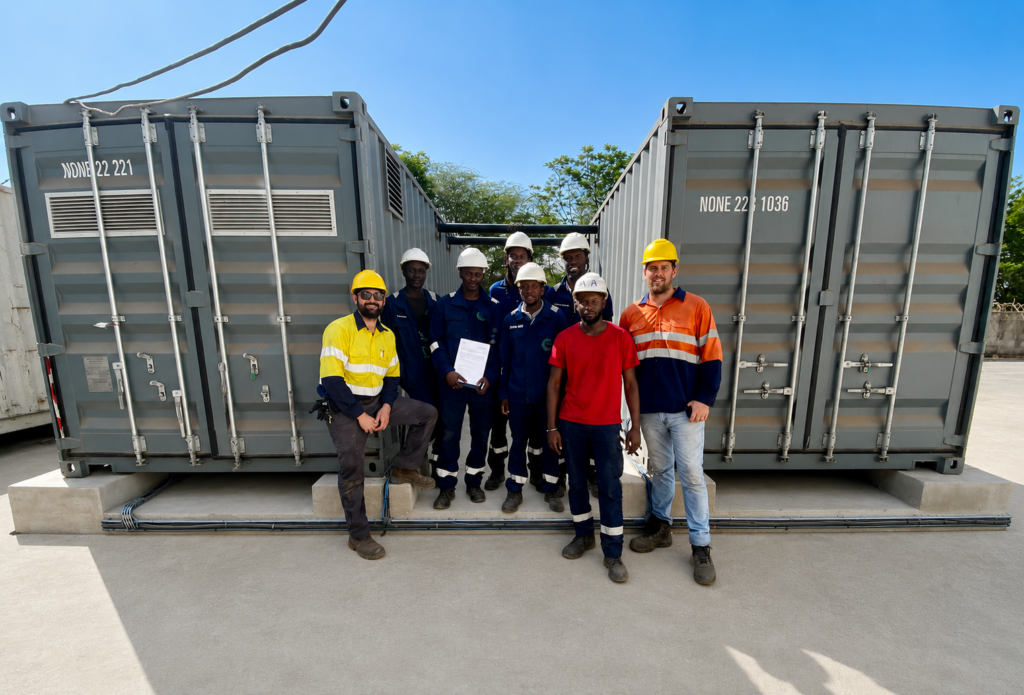
HWT supplied a compact containerised sewage treatment plant near Dakar, Senegal, designed to treat 15 m³/day of domestic wastewater. The installation incorporates biological treatment, nitrogen removal and disinfection, with the treated water being suitable for a range of non-potable reuse applications.
The principal biological treatment processes are housed within two modified 6 m shipping containers. This modular approach provides a robust and compact sewage treatment solution that is particularly well suited to remote developments and locations where conventional municipal sewage infrastructure is unavailable.
The system is fully automated and has been designed to operate with minimal day-to-day operator intervention.
Sewage Collection and Lifting Station
Raw sewage flows under gravity to a dedicated sewage lifting station, which was included as part of the HWT scope of supply.
From the lifting station, sewage is pumped to the biological treatment plant at a controlled rate.
This arrangement allows the treatment plant to be positioned independently of the incoming gravity sewer level while providing controlled transfer of wastewater into the biological process.
Containerised Sewage Treatment Plant Near Dakar
Biological wastewater treatment takes place within two modified 6 m shipping containers.
The treatment process has been designed for the removal of organic material and dissolved nitrogen compounds from the incoming sewage.
Biological treatment is used to reduce the organic loading while appropriate aerobic and anoxic conditions allow nitrogen compounds to be biologically transformed and removed.
Once biological treatment has been completed, the treated wastewater undergoes final disinfection before being discharged or reused.
By incorporating the principal treatment processes within modified shipping containers, a compact and transportable sewage treatment system has been provided.
Furthermore, much of the mechanical and electrical installation can be completed before the equipment reaches site. This can considerably simplify installation and commissioning, particularly for projects in remote locations.
Treated Sewage Water Reuse
An important objective of the project was to allow the treated wastewater to be regarded as a useful water resource rather than simply a waste stream.
The treated water can be reused for several non-potable applications, including:
- Irrigation
- Toilet flushing
- Dust suppression
- Fire-control water
Where reuse is not required, provision can also be made for the safe discharge of treated wastewater to the environment, subject to the applicable local environmental requirements.
In areas where water resources are limited, beneficial reuse can reduce the demand placed on potable-water supplies.
Treated Water Quality
The sewage treatment plant was designed to produce treated water compliant with the South African Department of Water and Sanitation (DWS) General Limit specified for the project.
The DWS General Limit establishes maximum concentrations for a range of physical, chemical and microbiological wastewater parameters.
For installations outside South Africa, applicable local Senegalese discharge and reuse requirements should also be considered when establishing the final treated-water specification.
On your published page, I would internally link DWS General Limit to your existing HWT technical article.
Fully Automated Sewage Treatment
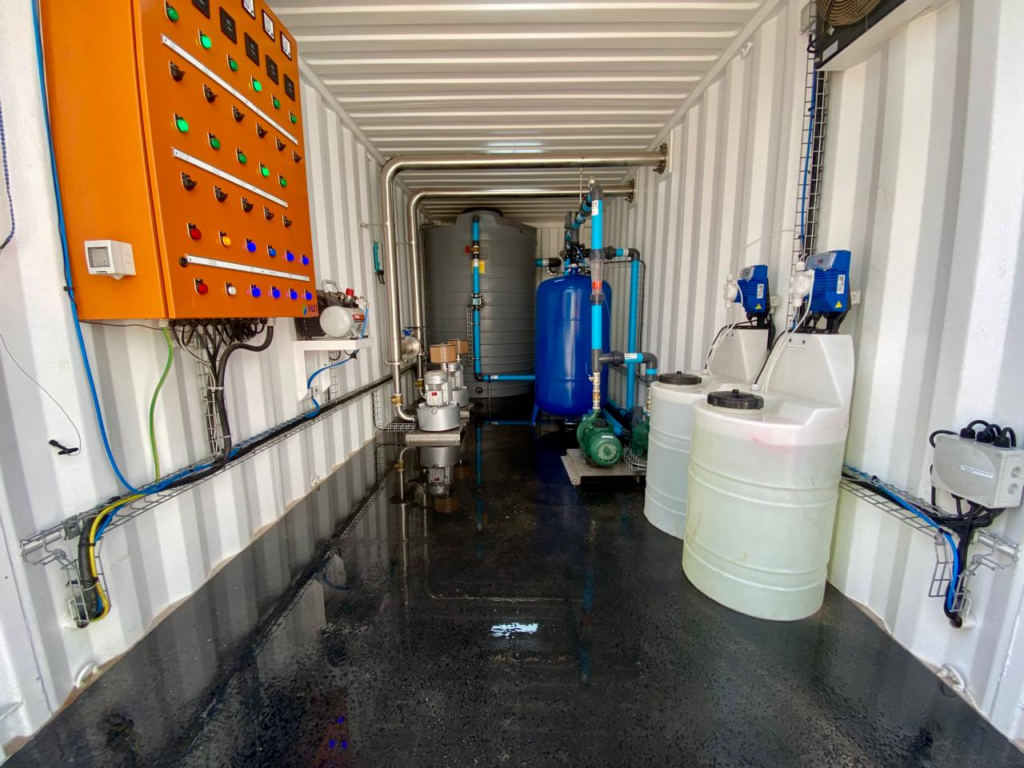
The treatment plant has been designed as a fully automated system requiring minimal operator intervention.
Process equipment, instrumentation and controls are integrated so that the principal treatment functions can be automatically managed.
This approach is particularly valuable for remote installations where a dedicated wastewater-treatment operator may not always be available.
Modular Treatment for Remote Applications
Containerised sewage treatment provides a practical alternative where conventional wastewater infrastructure is unavailable.
For the Dakar installation, a design capacity of 15 m³/day has been provided using two modified 6 m shipping containers together with the associated sewage lifting station.
The modular arrangement provides several advantages, including a compact footprint, transportability, simplified site installation and the ability to manufacture much of the treatment plant under controlled workshop conditions.
HWT Sewage Treatment Plants
HWT designs and supplies sewage treatment systems for residential developments, mines, construction camps, lodges, farms, industrial sites and other off-grid applications.
Each plant is designed around the incoming sewage characteristics, hydraulic loading, required treated-water quality and intended reuse or disposal route.
Containerised systems can provide an effective solution where compact construction, rapid installation and reliable biological treatment are required.
Control room