
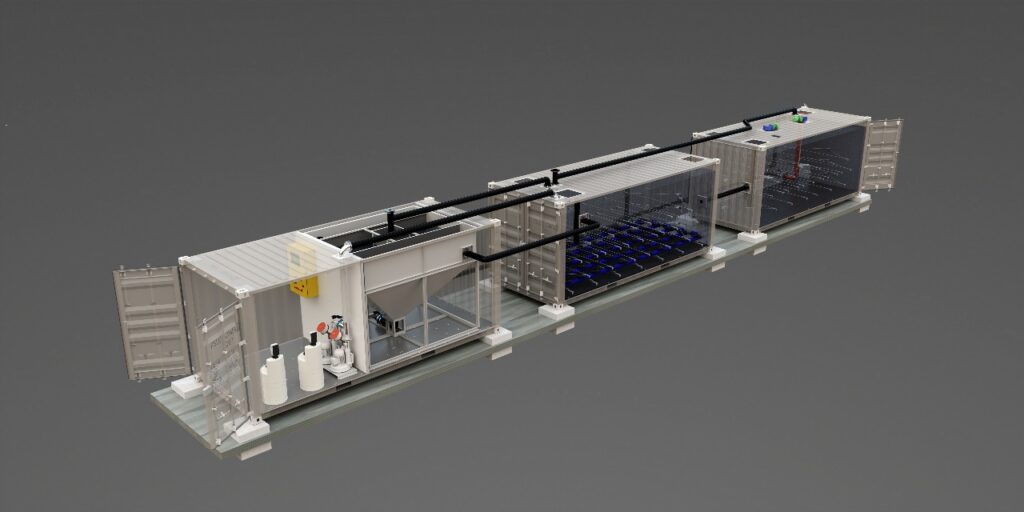
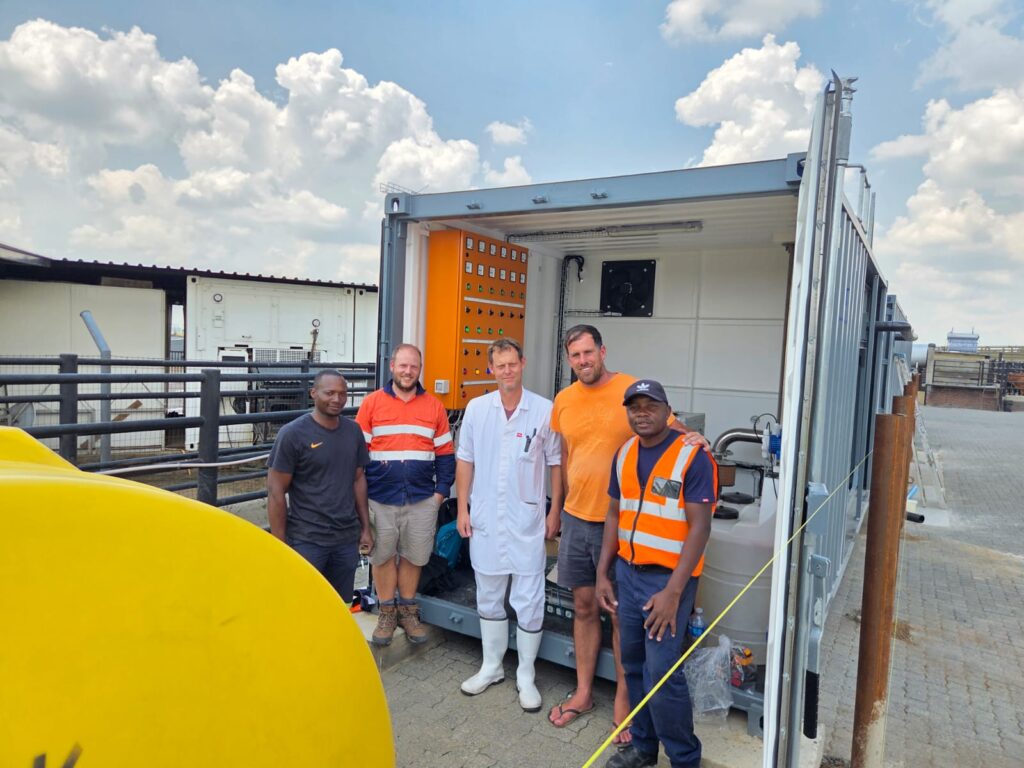
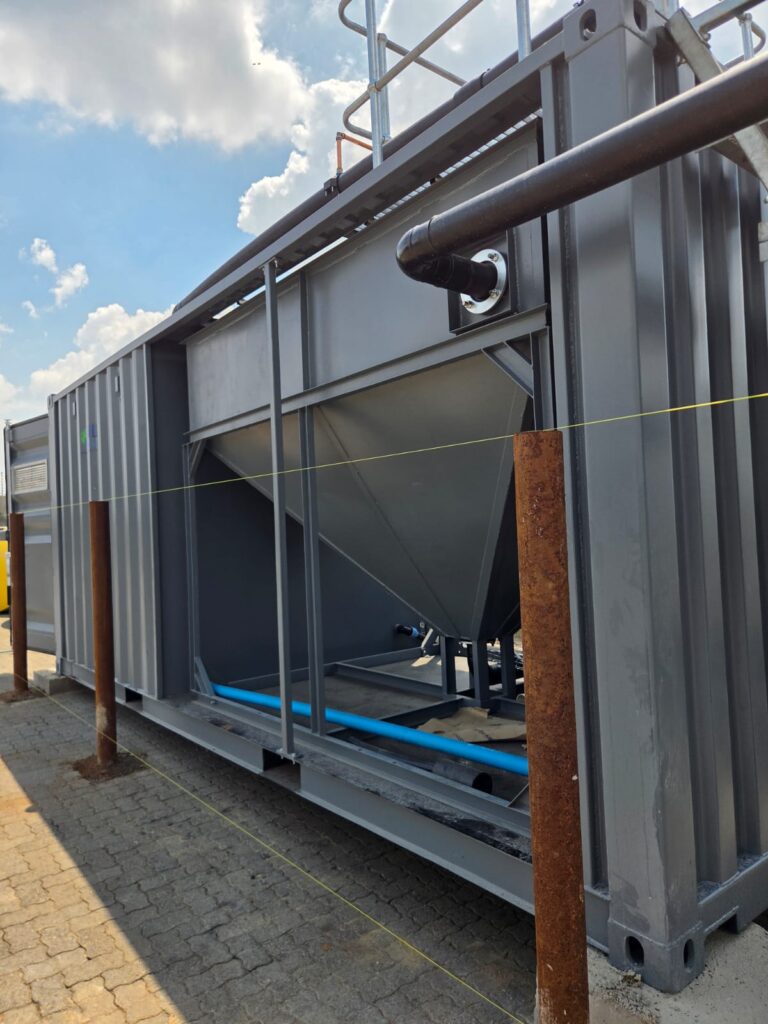
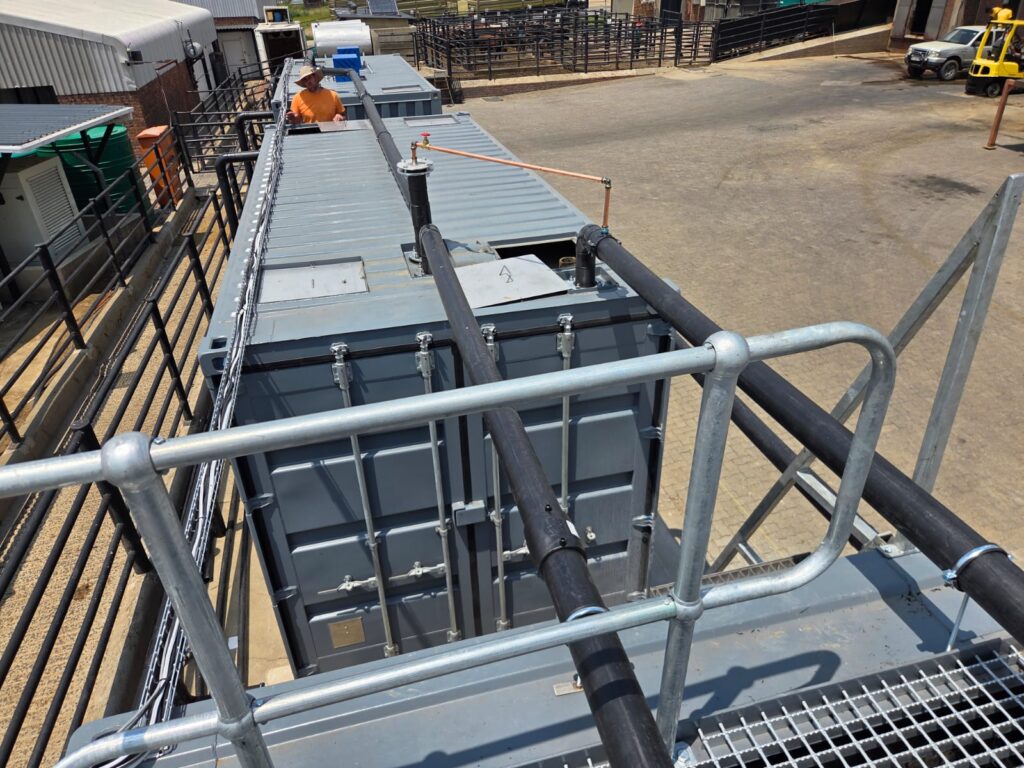
- biological treatment of wastewater takes place in three modified 6m shipping containers
- removal of inert solids
- treatment processes include removal or organic material and dissolved nitrogen compounds
- pH adjustment as required
- foam control (cleaning chemicals and proteins in the waste water will cause foaming)
- measurement of
- discharge flow
- electrical consumption
- treated water will be
- discharged to Municipal sewer
- water quality will be compliant with the local Municipal by-laws
This is a fully automated system, requiring minimal operator intervention.
Key equipment is supplied duty/duty standby.
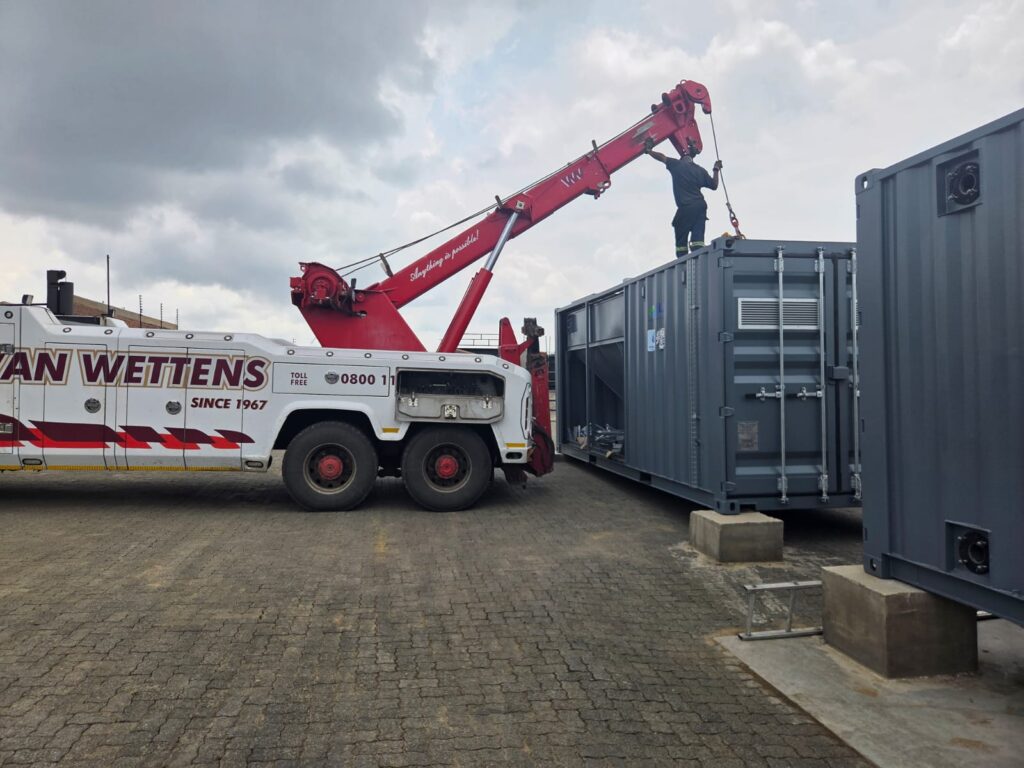
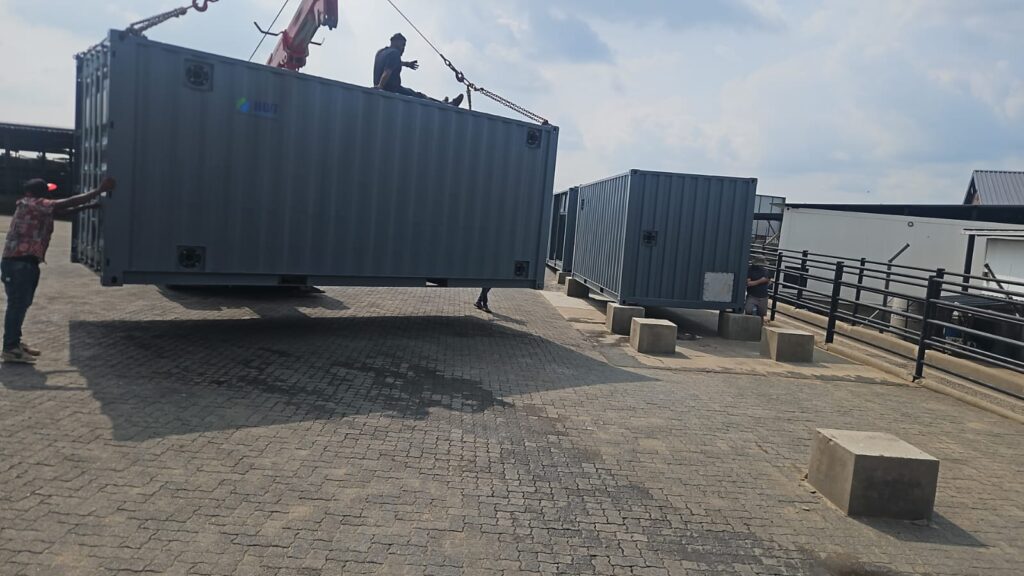
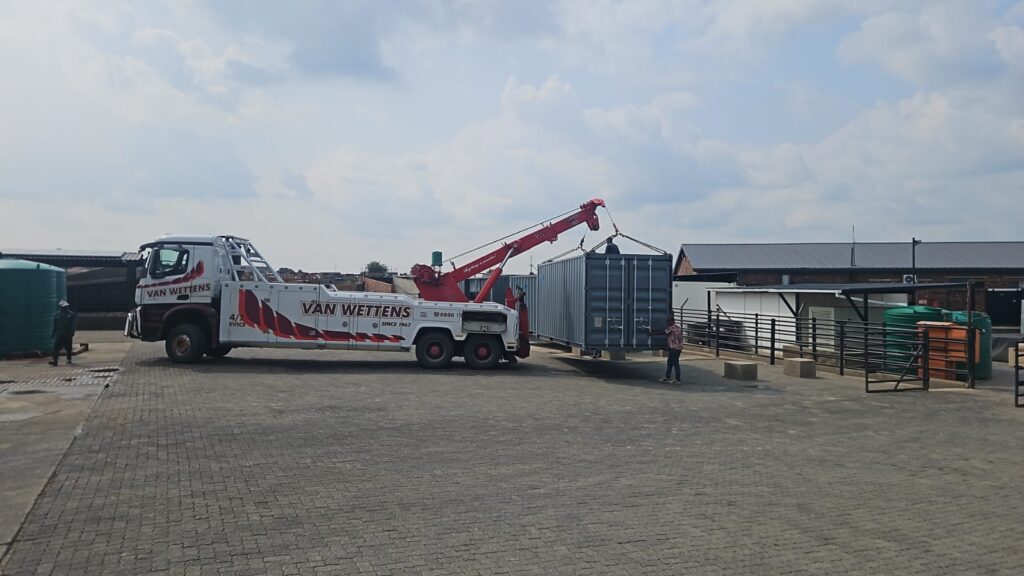

Abattoir effluent treatment is essential for environmental protection and regulatory compliance. In addition, meat processing wastewater contains high organic loads, blood, fats, oils, grease, and suspended solids. Consequently, untreated discharge can severely damage rivers, groundwater, and municipal sewer systems.
Abattoir wastewater usually has very high COD and BOD levels. As organic pollution increases, dissolved oxygen levels decrease. As a result, fish and aquatic organisms may die. Furthermore, untreated wastewater can create strong odours and poor environmental conditions.
Fats, oils, and grease often block pipelines and sewer infrastructure. Meanwhile, blood and organic solids decompose rapidly and attract insects and vermin. Therefore, untreated effluent can become both an environmental and public health risk.
Proper wastewater treatment helps abattoirs meet discharge regulations and municipal standards. Moreover, compliance reduces the risk of penalties, shutdowns, and reputational damage. At the same time, it demonstrates responsible environmental management and operational accountability.
Modern treatment systems remove pollutants before discharge or reuse. Typically, these processes include screening, balancing, flotation, biological treatment, clarification, and disinfection. Consequently, final effluent quality improves significantly.
In many cases, treated water can also be reused for irrigation or washdown applications. Accordingly, effective treatment can reduce both water consumption and operating costs.
Water scarcity is becoming increasingly important across South Africa. Therefore, efficient wastewater treatment is now a critical part of sustainable meat processing operations. Furthermore, environmental regulations continue to become more stringent each year.
By investing in reliable treatment infrastructure, abattoirs protect valuable water resources and support long-term operational sustainability. Ultimately, effective wastewater treatment benefits both industry and the environment.
Need a Custom Treatment Solution?
Partner with HWT to design a treatment system tailored to your operational requirements.
Get in touch with our engineering team today