
Water Disinfection Systems for Safe and Reliable Treatment
At HWT, advanced Water Disinfection Systems are designed and supplied for potable water, wastewater, industrial process water, and reuse applications. Effective disinfection is essential because harmful microorganisms, bacteria, viruses, and pathogens must be removed before water can be safely discharged, reused, or consumed.
Consequently, modern disinfection technologies are widely incorporated into water and sewage treatment systems to improve public health protection and maintain regulatory compliance. Furthermore, properly designed disinfection systems help ensure consistent water quality under varying operating conditions.
Water Disinfection Systems for Potable and Wastewater Applications
Several disinfection technologies can be utilised depending on the application, water quality, and operational requirements. These systems are commonly installed at the final stage of the treatment process to destroy remaining microorganisms before the treated water is discharged or distributed.
The following technologies are frequently applied:
- Ultraviolet (UV) disinfection
- Sodium hypochlorite dosing
- Chlorine gas systems
- Ozone treatment
- Chlorine dioxide systems
As a result, bacteria, viruses, algae, and pathogens can be effectively reduced or eliminated from the treated water stream.
Reliable Disinfection for Water Safety
Water disinfection systems are widely used in:
- Potable water treatment plants
- Sewage treatment plants
- Borehole water treatment systems
- Food and beverage facilities
- Mining and industrial applications
- Containerized treatment plants
- Water reuse systems
In addition, automated dosing and monitoring equipment can be incorporated to improve reliability and simplify operation. Residual disinfectant levels, flow rates, and contact times can therefore be continuously monitored to maintain treatment performance.
UV and Chemical Disinfection Technologies
UV disinfection systems operate by exposing microorganisms to ultraviolet light, which damages their DNA and prevents reproduction. Therefore, effective pathogen reduction can be achieved without introducing additional chemicals into the water.
Chemical disinfection systems, on the other hand, are frequently applied where a residual disinfectant concentration must be maintained within the distribution network. Consequently, chlorine-based systems are commonly selected for municipal and industrial applications.
Furthermore, ozone treatment systems can be utilised where strong oxidation and advanced disinfection performance are required. These systems are often applied for taste, odour, colour, and organic contaminant reduction.
Designed for Efficient and Automated Operation
Modern disinfection systems are designed to operate efficiently while minimising maintenance requirements. Therefore, automated controls, dosing pumps, instrumentation, and alarm systems are frequently incorporated into the overall treatment process.
Since 1994, HWT has designed and supplied practical water and wastewater treatment solutions throughout Southern Africa. Consequently, reliable disinfection systems can be integrated into complete treatment plants or supplied as standalone process units for new and existing installations.
Whether the application involves potable water, wastewater reuse, industrial treatment, or environmental compliance, dependable disinfection solutions can be engineered to suit the specific requirements of each project.
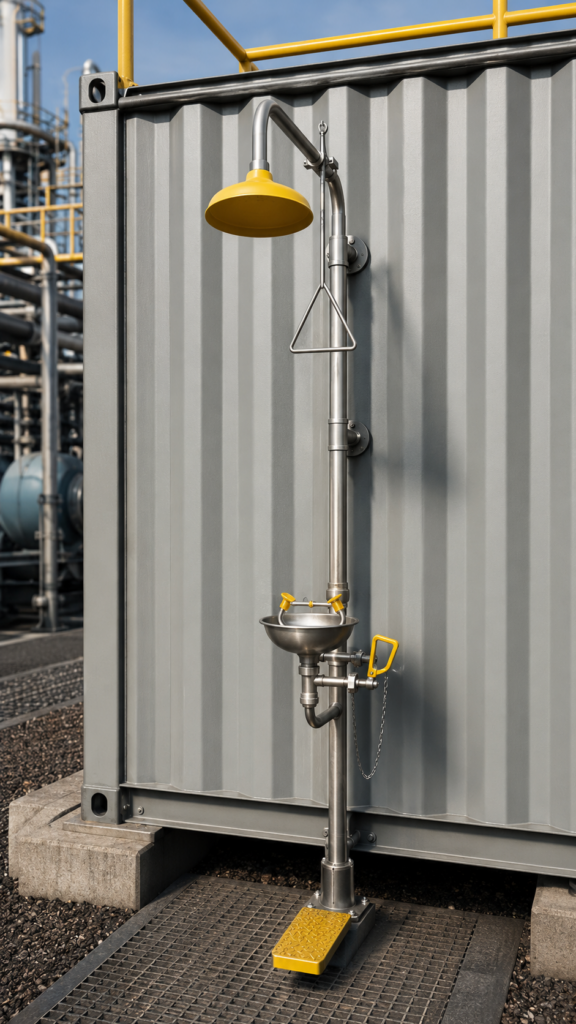
An emergency chlorine shower rapidly drenches a person with large volumes of clean water to dilute and wash away chlorine chemicals from the skin, eyes, and clothing after accidental exposure.