Water Alkalinity and Its Importance in Water Treatment
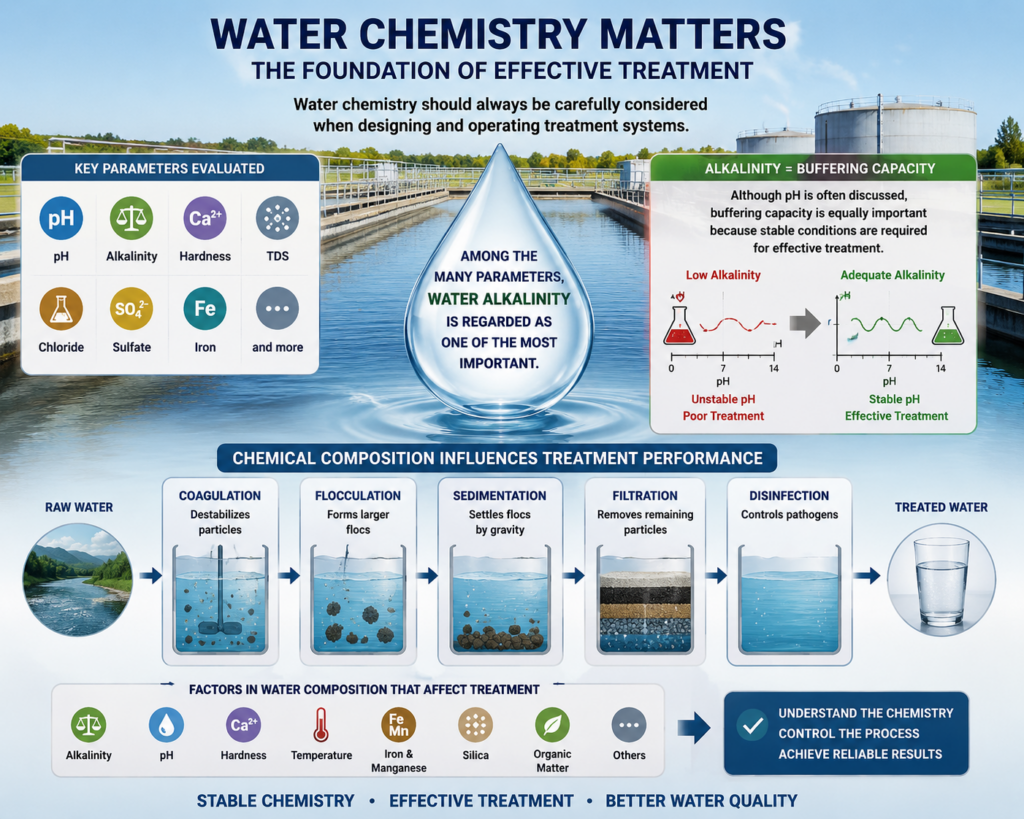
Water chemistry should always be carefully considered when designing and operating treatment systems. Among the many parameters that are evaluated, water alkalinity is regarded as one of the most important. Although pH is often discussed, buffering capacity is equally important because stable conditions are required for effective treatment. Consequently, the performance of many treatment processes is influenced by the chemical composition of the water.
Understanding Water Alkalinity
Water alkalinity is defined as the ability of water to resist changes in pH when acids are introduced. It is mainly provided by bicarbonates, carbonates, and hydroxides that are dissolved in the water. Therefore, these compounds act as natural buffers and help maintain stable operating conditions.
Alkalinity is normally measured in milligrams per litre (mg/L) as calcium carbonate (CaCO₃). While alkalinity and pH are related, they should not be confused. A water source may have a neutral pH and still possess either low or high buffering capacity.
Why Alkalinity Is Important
In biological wastewater treatment systems, sufficient buffering capacity is required for healthy microbial activity. During nitrification, alkalinity is consumed, and consequently the pH may decrease if adequate reserves are not available. As a result, treatment efficiency may be reduced.
Similarly, in potable water treatment and reverse osmosis systems, this parameter influences scaling potential, chemical dosing requirements, and corrosion tendencies. Therefore, routine monitoring is recommended to ensure stable operation.
Furthermore, irrigation water quality is affected by excessive carbonate and bicarbonate concentrations. High levels may contribute to soil pH problems and can reduce the availability of certain nutrients to plants. Consequently, agricultural productivity may be impacted over time.
Sources of Natural Buffering Capacity
These dissolved compounds are naturally introduced when water comes into contact with limestone and other carbonate-containing minerals. In addition, chemicals such as sodium bicarbonate, lime, or caustic soda may be added to increase buffering capacity where necessary.
However, low levels may require chemical adjustment to prevent rapid pH fluctuations. Therefore, regular testing should be carried out for both potable and wastewater applications.
Maintaining Stable Water Quality
A balanced level should always be maintained to ensure reliable process performance. Moreover, proper control can assist in preventing corrosion, improving biological treatment, and reducing chemical consumption. By understanding and managing these characteristics, stable and efficient water treatment can be achieved while long-term system reliability is supported.supported.