
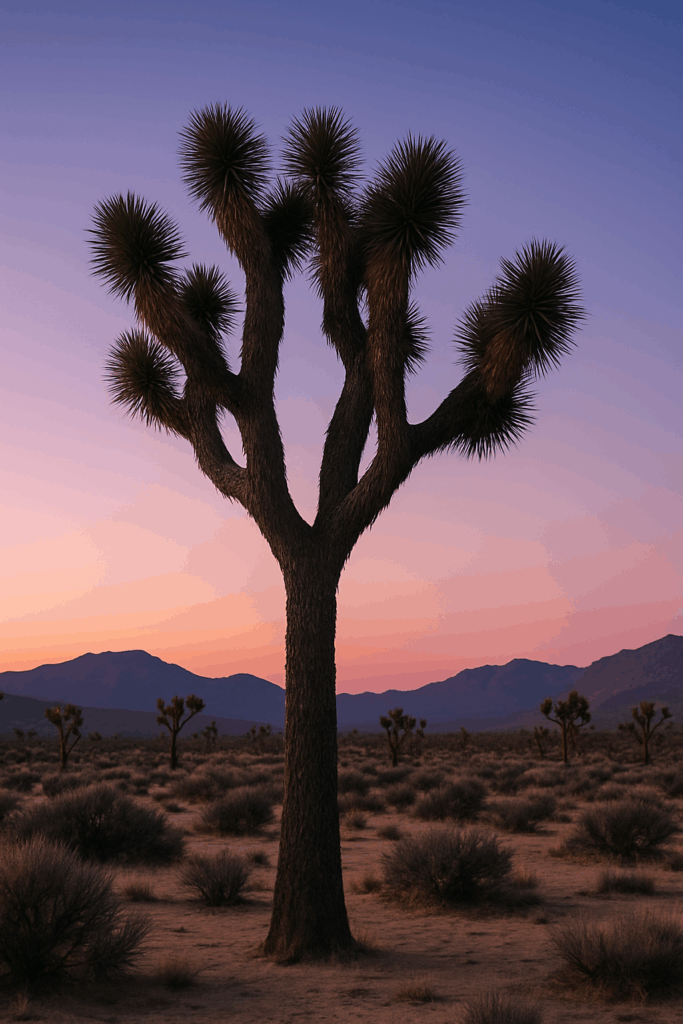
The Joshua Tree’s Decline: Why California’s Desert Icon Is Now an Endangered Species
It may be wondered whether the iconic Joshua Tree is real. Its unique, sculptural form appears as though it has been designed in an artist’s studio or imagined by Dr. Seuss himself. Yet, this remarkable desert species is entirely natural and has become one of the most recognizable symbols of California’s high desert.
Over the past decades, the Joshua Tree has been observed to be in steady decline. Concerns about its survival have been voiced by environmental activists, yet for many years, insufficient data was available to support official intervention. As a result, action was delayed until legislation in California (USA) officially classified the Joshua Tree as an endangered species, providing it with temporary legal protection.
Meanwhile, human activity in the Anthropocene era has continued, and the primary causes of the Joshua Tree’s decline remain unresolved. In nearby regions, Lake Mead has been documented to exhibit a striking “bathtub ring”, a visible reminder of falling water levels caused by prolonged drought and overuse.
This bathtub ring has been regarded as a powerful environmental warning, far more visible than the quiet loss of Joshua Trees across the Mojave Desert. The reduction of water levels in one of America’s key reservoirs has been linked to climate change, resource stress, and ecosystem imbalance, all of which directly affect desert vegetation and wildlife.
If further degradation is allowed to continue, the disappearance of the Joshua Tree may become a lasting emblem of environmental neglect. However, this time, it is hoped that protective measures will be implemented before the damage becomes irreversible — before, as the saying goes, the stable door is closed after the horse has bolted.
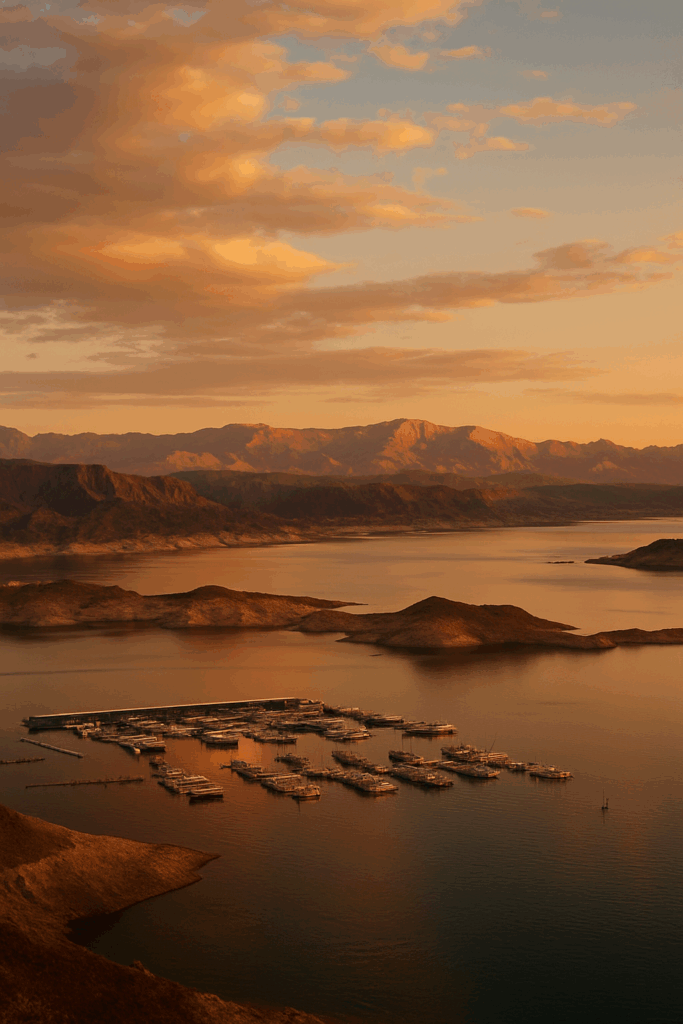
Lake Mead – the largest reservoir in the United States, formed by the Hoover Dam on the Colorado River along the border of Nevada and Arizona. It provides water and hydroelectric power to millions of people, though in recent years its dramatically low water levels have become a stark symbol of drought and climate change in the American Southwest.